
Lorenz Glatz Follows People, Not Platforms
A trained physicist and former CTO of Kabel Deutschland on running eight messengers, the third-time triage rule, and following people instead of platforms.
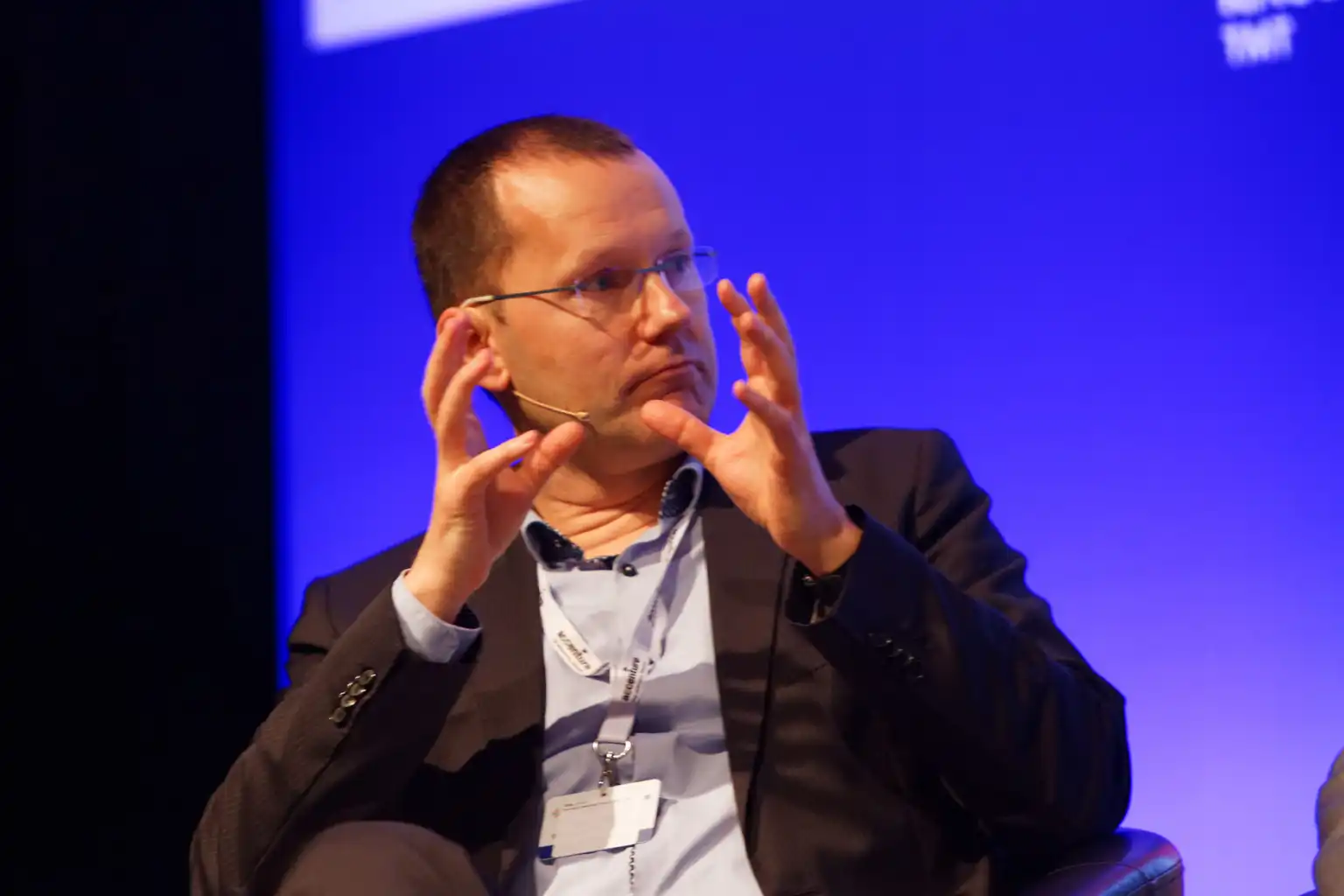
Lorenz Glatz is a physicist by training and spent nearly a decade as CTO of Kabel Deutschland, steering the triple-play rollout, the 2010 IPO, and the eventual sale to Vodafone. When he stepped out of that role he did not pick a single second act. He took on five at once: Chief Business Officer at Sunshine in Interaction, co-founder at Air5, advisor at Technetix, board member at Munus Stiftung, and active commoner at Ouvertura.
A schedule like that has no organisational home base. No shared calendar. No single boss whose request automatically beats every other request. So we asked him the thing we keep wanting to ask people in his position: how do you actually run a day like that, and what does your inbox look like at 7am?
His answer is not a productivity stack. It is a posture shift, and a fairly stubborn one: the unit of attention is no longer the tool, it is the person on the other side, and the tool is whatever they happen to use.
A representative day
Walk us through a recent Tuesday, from the moment you open your inbox to when you close your laptop. What does a genuinely representative day look like right now?
From getting up in the morning and checking for any urgent events or messages in my inbox on my phone, I am gradually consumed by meetings, calls and actual desk work. Being able to quickly switch between applications has become a key utility for me, so I actually tend to have all major apps open at all time simultaneously. This way I can easily switch between tasks, but also leisure, like a quick game of blitz chess in between.
In general the boundaries between work, non-profit activities and leisure have become more and more blurry over time. In the end I enjoy all of them.
I am gradually consumed by meetings, calls and actual desk work.
Eight messengers, one inbox
You moved from running a single large organization as CTO of Kabel Deutschland to holding simultaneous positions at Sunshine, Air5, Technetix, Munus Stiftung, and Ouvertura. How did your personal communication system have to change when there was no longer one organizational home base?
It has changed a lot. Initially it was phone calls, emails and possibly a single instant messenger that I was able to mandate for the entire organization. Doing a lot of non-profit work has made me realize I need to communicate with people where they are. I thus ended up having Signal, WhatsApp, MS Teams, Facebook Messenger, Webex, multiple Zulip instances, Telegram and LinkedIn open at any time. Essentially I stopped caring which tools to use, but am focused on people and tend to reach them where they are.
In a way one could say I have moved from tool-centric to people-centric communications. This is also true for the way I communicate. Some people, I would say most by now, prefer asynchronous communications, while others prefer plain old voice calls.
Franz is a unique and very helpful tool to enable this approach.
What survives from the high-pressure years
At Kabel Deutschland you were steering the triple-play rollout, a public listing, and eventually a multi-billion acquisition, all at once. What calendar or triage habits from that pressure period stuck, and which ones turned out to be CTO-specific and had to go?
The long hours, I presume.
In periods of intense pressure, when there simply were not enough hours in the day, I started to triage mostly email messages by my own priorities, by what my immediate tasks at hand were. In such times I tended to ignore messages I was only CC'd on, and messages pertaining to other priorities that had only been sent to me once or twice. If a message came in a third time, I assumed it was important enough to be processed soon. It was quite interesting to observe that a lot of messages never made it to that third round. And then of course there was hierarchy. Messages from the boss were a priority in any case.
These intense pressure times fortunately have stopped with retiring from my CTO role, so these days I think I am pretty good at responding to all messages, albeit not necessarily to all of them immediately.
It was quite interesting to observe that a lot of messages never made it to that third round.
The triage rule outlives the pressure that produced it. The hierarchy rule does not, because once you sit on five boards there is no single "boss" left to sort by.
Running meetings inside a meeting-intelligence company
Sunshine in Interaction analyses meeting behavior in real time. Does having that lens in-house change how you personally run or prepare for your own calls?
Good question. Yes it does, and in quite a few ways, some of them unexpected for me. I am relying a lot on our toolset to help me guide meetings as they progress. The impact on productivity and creativity is astonishing once you experience it first hand. Also understanding the social fabric of teams better, especially over longer periods of time, is invaluable in managing successful outcomes.
With LLMs starting to reduce the number of people required to do specific tasks, the pressure on the remaining employees increases even more, specifically the speed of execution that is as required as it is expected. So Sunshine's tool suite is supporting, I would even say enabling, that required optimisation to begin with.
What surprised me, though, was that our tools also led to a kind of "gamification" of meetings. Providing context as well as goals and expected behaviour to all participants in a meeting led to a natural joint effort of all team members to improve our metrics, which in this case means our results.
A behaviour the product caught him in
Is there a specific behavior Sunshine surfaces in teams that you've caught yourself doing and tried to correct?
Oh, absolutely. I tend to talk too long. Sometimes this is intended, sometimes it just happens. After all, all of us have better and worse days. Sunshine cuts through the crap right away and incentivises me to just shut the f*** up.
Civic work and commercial urgency
Munus Stiftung and Ouvertura are civic and commons-based, structurally very different from commercial timelines. How do you context-switch between those obligations and the commercial urgency of a stealth startup?
Like I said earlier, I enjoy all of my activities. In fact I have chosen to do what I am doing, so in terms of mindset there is no switching needed. The biggest change possibly is what drives the people I communicate with.
In the non-profit work, people are typically motivated by their desire to make this world a better place directly, which brings an openness to interactions that is much more rare in the business world. On the other hand it also requires more sensitivity to our differences and personalities, as we are all in this together without any financial motivation.
What he wishes he had built sooner
What's the one thing about your current communication setup, tools, routines, rules, that you wish you'd built sooner?
Essentially two items: communicating more people-centric and less tool-centric. The second one is adopting the GTD (Getting Things Done) framework by David Allen.
- GTD (Getting Things Done)
- David Allen's task-management framework: capture every commitment in a trusted system, decide the next physical action, organise by context, and review weekly. The point isn't speed. It's never relying on memory to know what's next.
The two answers fit together neatly. People-centric communication tells him who he owes something to; GTD tells him what the next action is. Without the first you are managing a stack of platforms. Without the second you are managing a stack of pings.
A note on what he isn't doing
Glatz is not consolidating. He is not standardising on one chat tool. He is not running an inbox-zero ritual or a daily review at 6am. He is not writing rules for his contacts about how to reach him.
The thing he is doing is small and obvious in retrospect: he treats the platform as the other person's choice, and arranges his own day so that following them across eight apps is cheaper than negotiating with each of them about which app to use. That is, almost exactly, the assumption Franz was built on. Not that one app could replace eight, but that one workspace could hold all eight, so the choice never has to land on the user in the first place. Every switch he does not have to make is one less payment of the switching tax that quietly eats a fragmented workday.
Key takeaways
- The platform is the other person's choice. Stop fighting for consolidation; arrange your day around following them.
- Once you have more than one organisation, hierarchy stops being a triage tool. Repetition replaces it.
- Most messages quietly resolve themselves before they arrive a third time. The third one is the signal worth acting on.
- GTD answers 'what is the next action.' A people-centric inbox answers 'on which platform.' You need both.
Run every conversation in one place
Franz keeps Slack, WhatsApp, Signal, Teams, Telegram and the rest open in a single workspace, so you can follow people across platforms without losing the thread.
- Multitasking Communication
- Open Apps Workflow
- Nonprofit Tech Leader
- Cross-Organization Work
- Digital Communication Tools
Related reading
All-in-one messenger: keep every chat in one desktop app
Bring WhatsApp, Slack, Telegram, Messenger, email, and more into one desktop app. See when an all-in-one messenger helps and how Franz keeps it simple.

Add Slack, WhatsApp, and Signal to One Window
Add Slack, WhatsApp, Signal, email, and more to one Franz window so every account stays signed in, separated, and reachable from one sidebar.
Context Switching Is the Productivity Tax Nobody Tracks
Context switching is the productivity tax nobody tracks. Discover the hidden focus drain across your inboxes, and how Franz ends it for good.